
Hair Tissue Mineral Analysis
Understand Your Mineral Blueprint
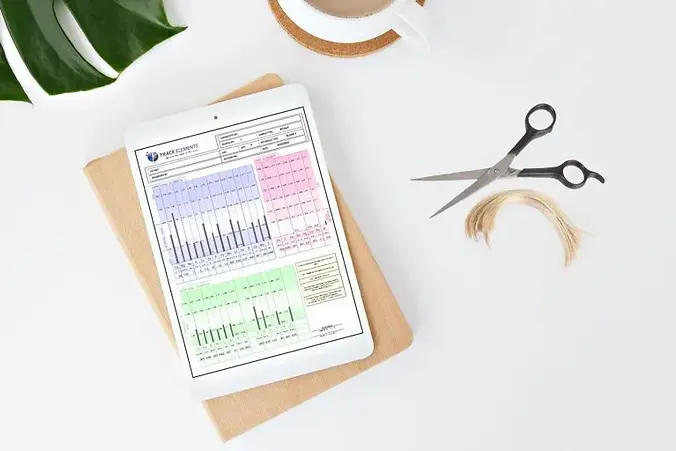
Personalized Insight Into the Patterns Behind How You Feel
A small hair sample can provide an educational look at mineral patterns connected to energy, stress, metabolism, digestion, sleep, and hormone balance.
Your results are reviewed alongside your health history so we can move beyond guesswork and identify practical food, lifestyle, and mineral-support next steps.
Begin with a Baseline Wellness Assessment to determine whether HTMA is appropriate for your wellness goals.
Who Is HTMA For?
HTMA may be helpful if you are experiencing:
-
Fatigue, low energy, or feeling “tired but wired”
-
Hormone imbalances, irregular cycles, or PMS
-
Thyroid symptoms (even with “normal” labs)
-
Anxiety, depression, or mood instability
-
Brain fog or poor concentration
-
Hair thinning or loss
-
Sleep issues
-
Postpartum depletion or recovery
-
Suspected heavy metal exposure or toxicity
-
General “I feel off but no one can tell me why” situations
-
Preconception planning — mineral status is foundational for fertility and fetal development
-
Prefer personalized recommendations instead of generic supplements
-
Are ready to build a practical, sustainable wellness plan
HTMA is an educational wellness tool and does not diagnose or treat disease.
Why Hair Mineral Testing Is Different
Minerals work together...not in isolation.
HTMA helps us look at relationships between minerals and patterns associated with stress, energy production, metabolism, and overall resilience.
Your results are interpreted in context with your symptoms, health history, nutrition, and lifestyle.
-
No one-size-fits-all protocol
-
No random supplement guessing
-
No extreme or restrictive plan
What This Test Evaluates
-
Calcium, magnesium, sodium, potassium, zinc, copper, iron, phosphorus, and more
-
Key mineral ratios reflecting adrenal function, thyroid activity, and blood sugar regulation
-
Toxic heavy metals: arsenic, mercury, lead, cadmium, aluminum, and others
-
Markers of oxidative stress and detoxification capacity
-
Adrenal and thyroid activity patterns
-
Copper imbalance: a common and often missed driver of hormonal and mood issues
-
Nervous system and metabolic rate patterns

What’s Included in Your HTMA Roadmap?
The HTMA is a non-invasive lab test that uses a small sample of hair to assess your mineral status and toxic metal burden at the cellular level — revealing patterns that a standard blood panel simply cannot show.
Minerals are the spark plugs of the body. They drive every enzymatic reaction, support hormone production, regulate the nervous system, and power cellular energy. When they’re out of balance, the downstream effects show up as fatigue, mood changes, hormone imbalances, thyroid dysfunction, and more.
Your Personalized Support Includes:
-
Comprehensive health-history and symptom review
-
Hair collection kit with clear instructions
-
Laboratory mineral analysis
-
Personalized review of mineral levels and ratios
-
Food, hydration, lifestyle, and mineral-support education
-
A practical wellness roadmap based on your results
-
Six-week follow-up session to review progress and next steps
What Your HTMA Results Can Help Clarify
Your report may offer educational insight into:
-
Mineral balance and key mineral relationships
-
Patterns associated with stress and energy production
-
Metabolic and nervous-system tendencies
-
Food and lifestyle areas that may deserve attention
-
Whether a retest may be useful for tracking progress
Most importantly: you receive clearer direction for your next steps.
Your HTMA Wellness Roadmap
The process is simple:
Complete your intake and collect a small hair sample.
Your sample is analyzed by the laboratory.
We review your report together and connect it with your health history.
You receive personalized food, lifestyle, and mineral-support education.
We meet again in six weeks to evaluate progress and refine next steps.

Frequently Asked Questions
Does HTMA diagnose a medical condition?
No. HTMA is used for educational wellness insight and does not diagnose, treat, cure, or prevent disease
I'm on medications, will that affect my results?
Drugs do affect your nutritional status as well as your requirements. For example, steroids used for pain control can produce calcium loss. These effect vary with the amount and duration of the drug being taken. A hair analysis will show you how to counteract these effects by addressing any imbalance that is now evident. Some vitamins and minerals can interfere with medications, so it is important to check with your doctor as well if you are on medication.
How much hair is needed?
You’ll receive simple collection instructions with your kit. You will take the sample from your scalp hair using 3-5 different locations. You use scissors to cut the sample as close to the root as possible. You only keep the first 1-1.5in closest to the scalp and discard the rest. You will need about 1 tablespoon of hair.
Is HTMA available for remote clients?
Yes. The collection kit can be completed at home, and your review sessions can be held virtually.
Is hair analysis appropriate for children or during pregnancy?
It can be considered, but interpretation should be conservative and clinically corroborated. Confirm meaningful abnormalities with established diagnostic tests and follow relevant guidance.
What are the main reliability limits?
External contamination, hair treatments, hair color, and differences in lab methods can affect levels. We use a certified lab with transparent protocols and aim to keep collection method consistent.
Will hair dyes and shampoo affect my results?
Yes, it is impotent to get a “clean” sample. If you use a dandruff shampoo or other medicated shampoo it is impotent to use a clarifying shampoo (supplied in kit) so that you don’t get an inaccurate reading. If you have dyed or bleached your hair then you need to wait 4-6 weeks before taking the sample.
How long will it take me to get balanced using HTMA?
This is a bit complicated to answer. Of course, you are aware that imbalances in your body that have developed over a lifetime are not correctable overnight. As those imbalances correct, underlying (and previously undetected) imbalances may surface. That is why it is important to retest every 2-4 months (depending on what your hair analysis showed). You can use hair analysis long term as a preventative health measure, or you can use it to correct the things that are currently causing issues in your life and once you experience relief from that you may choose to stop. Generally speaking I would say that to start correcting some of these long term issues it will take between 4-6 retest. This is of course dependent on many things such as how compliant you are with the protocol and lifestyle and dietary suggestions.