
Lower Belly Bloat and Constipation? Let’s Talk About Fiber

Updated: Aug 25

If you are struggling with lower belly bloat or constipation, your body may be trying to tell you something important.
Many people focus on probiotics, cleanses or supplements while overlooking the foundational role that daily food choices play in digestion. Inadequate fiber, poor hydration and limited food variety may all contribute to digestive sluggishness.
Fiber is not the only possible cause of bloating or constipation, but it is an important place to begin.
What Is Fiber and Why Does It Matter?
Fiber is a type of carbohydrate found in plant foods that the body does not fully digest. Instead, it moves through the digestive tract and helps support healthy elimination and beneficial gut bacteria.
Fiber may help:
Promote comfortable, regular bowel movements
Support healthy stool consistency
Feed beneficial gut bacteria
Support fullness after meals
Promote balanced blood sugar and cholesterol levels
Unfortunately, most Americans are not getting enough fiber. More than 90% of women and 97% of men do not meet the recommended daily intake.
Lower Belly Bloat and Constipation: Signs You May Need More Fiber
Low fiber intake may contribute to:
Hard, dry or pellet like stools
Straining or difficulty eliminating
Lower belly bloating or discomfort
Feeling as though you did not fully empty
Hunger soon after eating
Irregular bowel movements
These symptoms may have several possible causes. If they are persistent, worsening or accompanied by pain, blood in the stool or unexplained weight loss, consult your healthcare provider.
Is It Constipation or Simply Less Waste?
During Phase I of the SHAPE ReClaimed program, some people notice that their bowel movements become less frequent. Because you may be eating less food and fewer processed ingredients, your body may naturally produce less waste.
Fewer bowel movements do not necessarily mean you are constipated.
Signs that you may need additional support include:
Hard or pellet like stools
Straining or difficulty eliminating
Abdominal discomfort or distention
Increasing gas or bloating
Feeling as though you did not completely empty
If you are unsure, reach out so we can review your food intake, hydration and individual needs.
Soluble and Insoluble Fiber
Most plant foods contain a combination of soluble and insoluble fiber. Both types are important.
Soluble Fiber
Soluble fiber absorbs water and forms a gel like texture in the digestive tract. It may support fullness, beneficial gut bacteria, healthy blood sugar and healthy cholesterol levels.

Foods that provide soluble fiber include:
Apples
Pears
Berries
Citrus fruits
Chia seeds
Flaxseed
Insoluble Fiber
Insoluble fiber adds bulk to stool and helps food move through the digestive tract.
Foods that provide insoluble fiber include:
Broccoli
Cauliflower
Cabbage
Leafy greens
Green bean
Nuts and seeds
Why Four Cups of Vegetables May Not Be Enough
The SHAPE ReClaimed FasTrac protocol requires a minimum of four measured cups of approved vegetables each day, along with two servings of fruit. However, not every cup of vegetables provides the same amount of fiber.
Lettuce, cucumber, zucchini, peppers and mushrooms are nutritious choices, but they are generally not as fiber dense as artichoke hearts, broccoli, Brussels sprouts, cabbage, cauliflower, collard greens, kale, green beans or snap peas.
This means you can meet the four cup vegetable minimum and still fall short on fiber if most of your choices come from lower fiber vegetables.
To support your fiber intake during FasTrac:
Eat at least four measured cups of approved vegetables each day
Include at least two cups from higher fiber vegetable choices
Eat both required fruit servings
Include up to two tablespoons of approved seeds if tolerated
Increase fiber gradually
Drink the amount of water recommended for you
Your four cups of vegetables are a minimum, not a maximum.
A Fiber Conscious FasTrac Day
Here is one example of how to make your FasTrac choices more fiber focused:
1 cup broccoli
1 cup Brussels sprouts
1 cup green beans
1 cup cauliflower or cabbage
1 medium apple
½ cup raspberries
Up to 2 tablespoons of chia seeds or freshly ground flaxseed
You do not need to eat these exact foods every day. The goal is to vary your choices and regularly include the more fiber dense foods on your approved list.
Best Phase I Fiber Foods
Higher Fiber Vegetables
Artichoke hearts
Broccoli• Brussels sprouts
Cabbage• Cauliflower
Collard greens
Green beans
Kale
Snap peas
Approved Fruits
Apples
Pears
Blackberries
Blueberries
Raspberries
Strawberries
Kiwi
Oranges
Approved Seeds
Chia seeds
Freshly ground flaxseed
Hemp seeds
Sesame seeds
Many conventional fiber lists include beans, lentils, oats, quinoa, brown rice, nuts and popcorn. Although these foods may provide fiber, they are not approved for SHAPE ReClaimed Phase I FasTrac.
Always follow the food list and personalized recommendations for your current phase.
How Much Fiber Do You Need?
General recommendations for adults commonly range from approximately 22 to 34 grams of fiber per day, depending on age and sex. You do not need to reach your final fiber goal overnight. A gradual increase is usually more comfortable and sustainable.
Your personal target may differ based on:
Your current intake
Your digestive symptoms
Your hydration
Your phase of the program
Your practitioner recommendations
How to Increase Fiber Without Increasing Bloating
Adding too much fiber too quickly may cause gas, cramping or additional bloating. Fiber absorbs water. Increasing fiber without adequate hydration may make constipation worse.
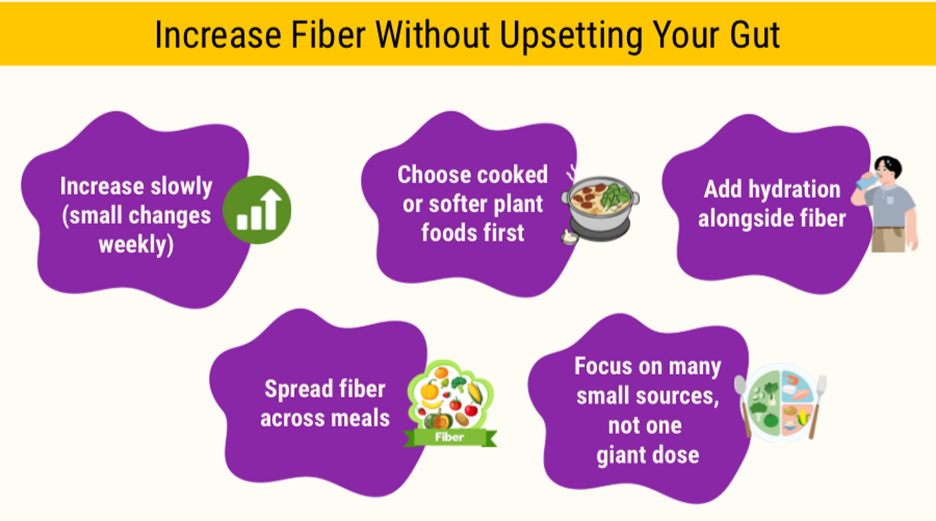
To help your digestive system adjust:
Increase fiber gradually
Spread fiber throughout the day
Drink adequate water
Try cooked vegetables if raw vegetables cause discomfort
Eat both required fruit servings consistently
Introduce chia or freshly ground flaxseed slowly
Include a variety of foods rather than repeating the same choices every day
When Fiber Is Not the Whole Answer
Persistent digestive symptoms are not always caused by low fiber. Stress, hydration, medications, food sensitivities, changes in routine and other health concerns may also affect bowel function.
Simply adding more fiber may not address the full picture.

During your Baseline Wellness Assessment, we will review your symptoms, nutrition, hydration, lifestyle and foundational wellness markers to identify practical next steps personalized to you.
Schedule your Baseline Wellness Assessment with Krehbiel Natural Health and begin understanding what your body may be trying to communicate.
This 90 minute assessment includes:
ZYTO BioScan
InBody Composition Scan
Foundational Urinalysis
BEMER session
Personalized wellness roadmap
Your body is speaking. Are you listening?
Medical Disclaimer: This content is for educational purposes only and is not intended to diagnose, treat, or cure any disease. Always consult your healthcare provider regarding medical conditions or changes to your health plan.



I had no idea how much my digestion was affecting the way I felt every day. I thought bloating and not having regular bowel movements were just part of getting older. Once I started paying attention to my fiber intake and making a few simple changes, I noticed less bloating, more regularity, and even better energy. This was such an eye-opening part of my wellness journey.